top of page
All Articles
SOCIETY OF EDITH STEIN


4. 'Givenness' of the Living Body
Edith Stein explores how we experience our own bodies. She suggests that our body is not simply a physical object among other objects in the world. It is our living body, constantly present in our experience and inseparably united with our conscious life. Through sensation, movement, perception, and action, we encounter ourselves as embodied persons. This understanding becomes essential for Stein's later exploration of empathy, personhood, and our encounter with other human b
4 min read


3. Understanding Soul, Body and Will: The Constitution of the Psychophysical Individual.
The psycho-physical individual unites soul and living body. Feelings, bodily responses, and actions illustrate psycho-physical causality. Mental capacities develop through experience, while will directs actions using the body. Feelings demand expression in movement, gestures, or reflection. Volition introduces creativity beyond cause-and-effect, making the "I" master of the body. Understanding this unity explains the intimate interplay of mind, body, and action in human exper
2 min read


2. Living Body and the "I": The Constitution of the Psychophysical Individual.
The living body forms the foundation of consciousness, combining inner sensations and outer perception. Movement, touch, and general feelings shape awareness of self and the world. Sensations are localized in the body, creating a unique psychophysical unity. The body and “I” are inseparable, with moods and feelings dynamically influencing both thought and action. This union highlights the essential link between psychic and physical life.
2 min read


1. Development of the "I": The Constitution of the Psychophysical Individual.
Edith Stein’s analysis of the psycho-physical individual explores the development of self-awareness, the continuous stream of consciousness, and the substantial soul. She shows how individuality arises through self-ness, qualitative variation, and the enduring attributes of the soul, forming a unified psycho-physical identity unique to each person.
2 min read


Introduction: The Constitution of the Psychophysical Individual.
Empathy through phenomenology is discussed, critiquing historical theories that fail to fully explain how we perceive others’ consciousness. It examines Lipps’ focus on expression and instinct, highlighting gaps in understanding. Phenomenology aims to show how individuals and personalities form in pure consciousness, providing clarity on the constitution of conscious objects. Defining the individual helps map the structure that makes empathy possible.
1 min read


7. Munsterberg's Experience of Foreign Consciousness: The Essence of Acts of Empathy.
Hugo Munsterberg’s theory examines experiencing the consciousness of others. Understanding foreign subjects involves perceiving their acts of will, which stay distinct yet enter awareness. He connects this with memory, showing past experiences influence the present. Extending “acts of will” to anticipatory attitudes, the theory emphasizes immediate awareness of others, shaping personal identity in relation to foreign consciousness.
2 min read


6. Max Scheler on Understanding Other Minds: The Essence of Acts of Empathy.
Scheler’s theory of grasping foreign consciousness explains how we Scheler’s theory explains perceiving others’ experiences alongside our own through a “neutral stream of experience.” Inner perception targets acts, not objects. Empathy lets us feel another’s emotions non-primordially while our own remain primordial. He distinguishes central and peripheral experiences, some persisting in non-actual modes, offering a framework that contrasts with Husserl and clarifies reflectio
2 min read


5. Genetic Theories on Understanding Other Minds: The Essence of Acts of Empathy.
Philosophical and psychological theories try to explain how we experience others’ consciousness. Imitation copies behaviours, association links actions to past experiences, and analogy infers feelings from our own. Empathy, however, presents the other’s experience directly. Phenomenology reveals its essence, showing how it occurs without replication or inference, offering a framework that all psychological approaches must acknowledge to remain valid.
2 min read


4. Controversy Between the View of Idea and Actuality: The Essence of Acts of Empathy.
Empathy involves experiencing another’s state while keeping one’s own awareness. The debate asks whether it is an idea or actuality, primordial or intuitively perceived. Unlike perception or knowledge, empathy engages directly with another’s experience without objectifying it. Reducing it to projection or representation oversimplifies its nature. Empathic understanding unfolds across multiple levels, transcending conventional psychological categories and demanding study as a
2 min read


3. Descriptions Including Lipps Analysis: The Essence of Acts of Empathy.
Empathy emerges when one recognizes another’s inner life. Edith Stein differentiates this from memory, imagination, or direct feeling, showing the other’s experience remains their own yet becomes present to us. Lipps suggested empathy might lead to full union with another, while Stein acknowledges its depth but maintains the individuality of both. Empathic experience unfolds gradually, revealing stages that allow understanding without merging identities, balancing connection
2 min read


2. Description of Empathy in Comparison with Other Acts: The Essence of Acts of Empathy.
Empathy allows experiencing another’s feelings while keeping them separate from one’s own. Unlike memory, expectation, or imagination, it interacts with another’s consciousness directly. The process begins with the emergence of the experience, deepens through engagement with its tendencies, and culminates in objectifying the empathized content. It shows how understanding another’s mind preserves both individuality and connection.
2 min read


1. The Method of Investigation: The Essence of Acts of Empathy.
The investigation explores empathy as recognizing another’s experiences without merging with them. Phenomenology distinguishes the “Givenness” of experiences from assumptions about knowing others, focusing on consciousness and perception. Empathy unfolds in stages, with levels of awareness revealing its essential structure. It remains distinct from memory or imagination, showing how inner life appears and shapes human interaction.
2 min read


Numbers
Book of Numbers recounts Israel’s journey from Sinai toward Canaan through censuses, laws and narrative. Tribal order, ritual life and leadership under Moses reveal covenant faith amid testing, rebellion and divine guidance.
4 min read


Empathy as the Path to Understanding The Self and Other.
Phenomenological Empathy is central to understanding others as integrated psycho-physical beings. By perceiving the living body and engaging in co-given experience, one can access the intentions, feelings, and volitions of others. Empathy reveals the unity of body, soul, and consciousness, facilitating deeper self-awareness. It also corrects misconceptions by clarifying character, with true understanding emerging through relational, embodied awareness of consciousness and liv
3 min read


Incarnation as Highest Thought
In Fides et Ratio, John Paul II calls Incarnation the highest thought: faith and reason united in paradox, fulfilling human Longing and Love
4 min read


Intersubjective Communion.
Faith and reason unite in intersubjective communion, where philosophy prepares humanity for divine mystery revealed in Christ.
4 min read


Beatitudes
Live with humility, gentleness, and heartfelt sorrow for sins. Seek righteousness, show mercy, embrace purity, and love peace. Rejoice in trials for God’s sake. The Beatitudes call us to reflect God’s holiness, mirror His mercy, and follow faith’s challenges as steps toward eternal joy and union with Him.
8 min read


Leviticus
Fire falls from heaven. Priests are ordained, sacrifices begin, and God takes up residence among Israel. This article walks through Leviticus as a living story—explaining its laws, rituals, holiness code, and Day of Atonement as God’s way of teaching His people how to live, worship, and survive in the presence of a holy LORD.
6 min read


Exodus
Exodus shows God freeing Israel, forming a covenant, and leading them toward holiness.
7 min read

Genesis
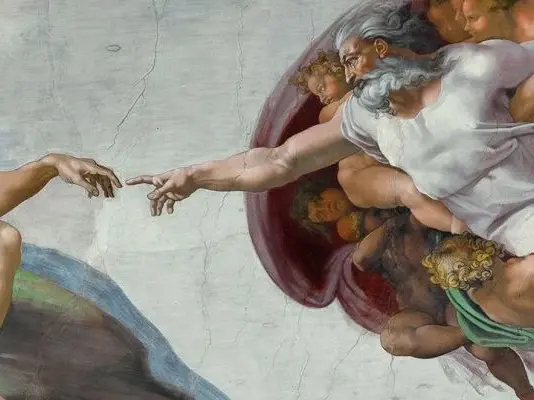
Book of Genesis.
5 min read
bottom of page